
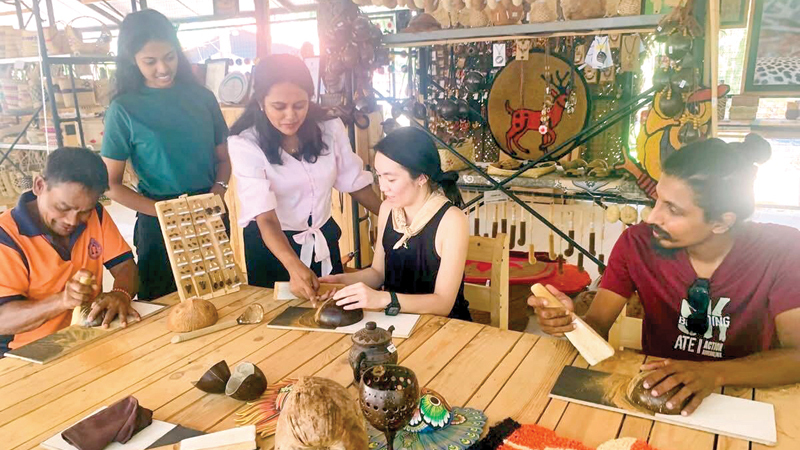
Sustainable Tourism in Sigiriya Is Growing Beyond Sightseeing
For most visitors, a trip to Sigiriya begins with the famous rock fortress. But just a short distance away, a quieter kind of travel experience is taking shape, one built around learning, craft and community rather than ticking off a checklist. This shift is part of a wider conversation happening across Sri Lanka about what sustainable tourism in Sigiriya should really look like.
That conversation recently gained national attention when the Sunday Observer featured Impact Center by ZeroPlastic in its World Tourism Day coverage, highlighting how tourism in this region can support culture and local livelihoods while reducing plastic pollution.
The Three Pillars Behind the Work
Nishshanka de Silva, Founder and Executive Director of the ZeroPlastic Movement, explained that genuine sustainability cannot be reduced to a single idea like recycling or conservation. Instead, he described three interconnected pillars that need to work together:
- Culture – respecting and preserving local traditions, skills and heritage
- Community – creating real economic opportunity for people living around Sigiriya
- Environment – reducing plastic waste and protecting natural surroundings
As de Silva put it, if even one of these three pillars suffers a negative impact, the result cannot be genuinely sustainable. This idea shapes how Impact Center by ZeroPlastic designs its visitor experiences in Sigiriya.
What This Means for Travelers Visiting Sigiriya
For anyone researching things to do in Sigiriya beyond the rock climb, this approach translates into practical, hands-on activities rather than passive sightseeing. Visitors can take part in craft-based sessions that connect directly to local skills and materials, giving a closer look at how everyday items are made using low-impact, plastic-free methods.
These experiences work well for a wide range of travelers, including families looking for interactive activities, culturally curious visitors who want context beyond a photo stop, and travelers who care about where their tourist spending actually goes.
Because the model is built around community involvement, spending time here also means supporting people who live and work in the Sigiriya area, rather than only interacting with large-scale commercial tourism.
Why the Culture-Community-Environment Model Matters
Sri Lanka’s tourism industry is often discussed in terms of numbers, arrivals, revenue and infrastructure. The Sunday Observer feature offered a different angle, asking whether growth can happen without the country losing its cultural soul in the process.
Impact Center by ZeroPlastic is one example of a local answer to that question. Instead of treating sustainability as a marketing label, the three-pillar approach asks a harder question at every step: does this activity protect culture, does it genuinely benefit the community, and does it avoid harming the environment. When all three hold true together, the experience earns the word sustainable.
Planning a Visit
If you are mapping out a Sigiriya itinerary that goes beyond the rock fortress, it is worth including time for a slower, more grounded experience. Craft sessions, village-based interactions and plastic-free workshops offer a different rhythm to a trip, one where you leave with a better understanding of the place rather than just a set of photographs.
To learn more about current activities, workshops and how to plan a visit, reach out to Impact Center by ZeroPlastic in Sigiriya directly. It is a simple way to add real cultural and community meaning to your time in the area.